June 2, 2026
Hatteras Island Beach Driving & ORV Permits: The Complete 2026 Guide
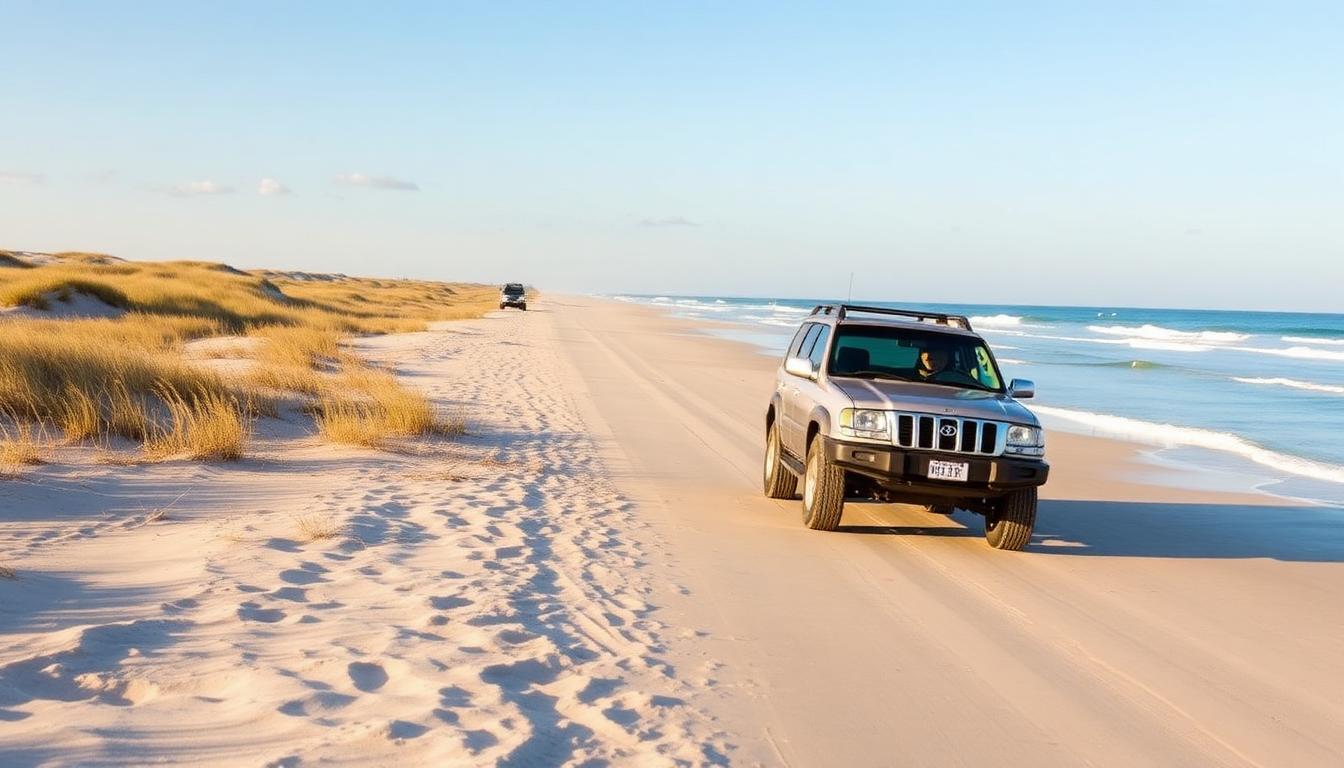
One of the most unique experiences on the Outer Banks is the ability to drive your vehicle right onto the beach. On Hatteras Island, miles of undeveloped shoreline within Cape Hatteras National Seashore are open to Off-Road Vehicles (ORVs) — making it possible to pull up to your favorite surf fishing spot, unload chairs and coolers directly onto the sand, and spend the day where the Atlantic meets the shore. For families staying in an Avon NC vacation rental, beach driving unlocks a side of Hatteras Island that most tourists never see.
This guide covers everything you need to know: permits, vehicle requirements, the best access ramps near Avon, seasonal closures, safety rules, and practical tips from years of local experience.
Do you need a permit to drive on Hatteras Island beaches?
Yes — an NPS Annual ORV Permit is required. Cape Hatteras National Seashore manages all beach driving access, and the permit system is in place to protect both the environment and visitors. As of 2026, the annual permit costs approximately $120 and is valid for one year from the date of purchase.
You can purchase your permit online through Recreation.gov before your trip, or in person at one of the NPS permit offices on Hatteras Island. Print the permit at home or save the digital copy to your phone — rangers routinely check vehicles on the beach. There are no daily or weekly options; if you plan to drive on the beach even once during your stay, the annual permit is your only route.
Vehicle requirements for ORV beach driving
Not every vehicle is cut out for sand. The National Park Service requires all ORV permit holders to use a four-wheel-drive (4WD) vehicle with low-range gearing. Standard two-wheel-drive cars, minivans, and most front-wheel-drive crossovers will get stuck — and getting towed off the beach is expensive and embarrassing.
Before you head to the ramp, make sure your vehicle has:
- True 4WD with low-range (4-Lo) transfer case — AWD without low-range is not recommended for soft sand.
- All-terrain or mud-terrain tires — Highway all-seasons are more likely to slip and dig in.
- A full-size spare tire — The beach is not kind to tires. A donut spare won't cut it.
- Tire pressure gauge and portable air compressor — Air down before hitting the sand; re-inflate before returning to pavement.
- Recovery gear — A rated tow strap, traction boards, and a sturdy shovel. A jack that works on sand is also wise.
- Tow points — Front and rear recovery points capable of handling a loaded pull.
- Valid registration, insurance, and the ORV permit displayed
Beach access ramps near Avon NC
Cape Hatteras National Seashore operates designated ORV ramps up and down Hatteras Island. From an Avon NC vacation rental, here are the ramps you'll use most often:
- Ramp 34 — Just north of Avon in Salvo. Great for families; wide beach, relatively firm sand, and close to home. Good for first-time beach drivers.
- Ramp 38 — Between Avon and Buxton. A quieter option with fewer crowds. Excellent for surf fishing and long beach walks.
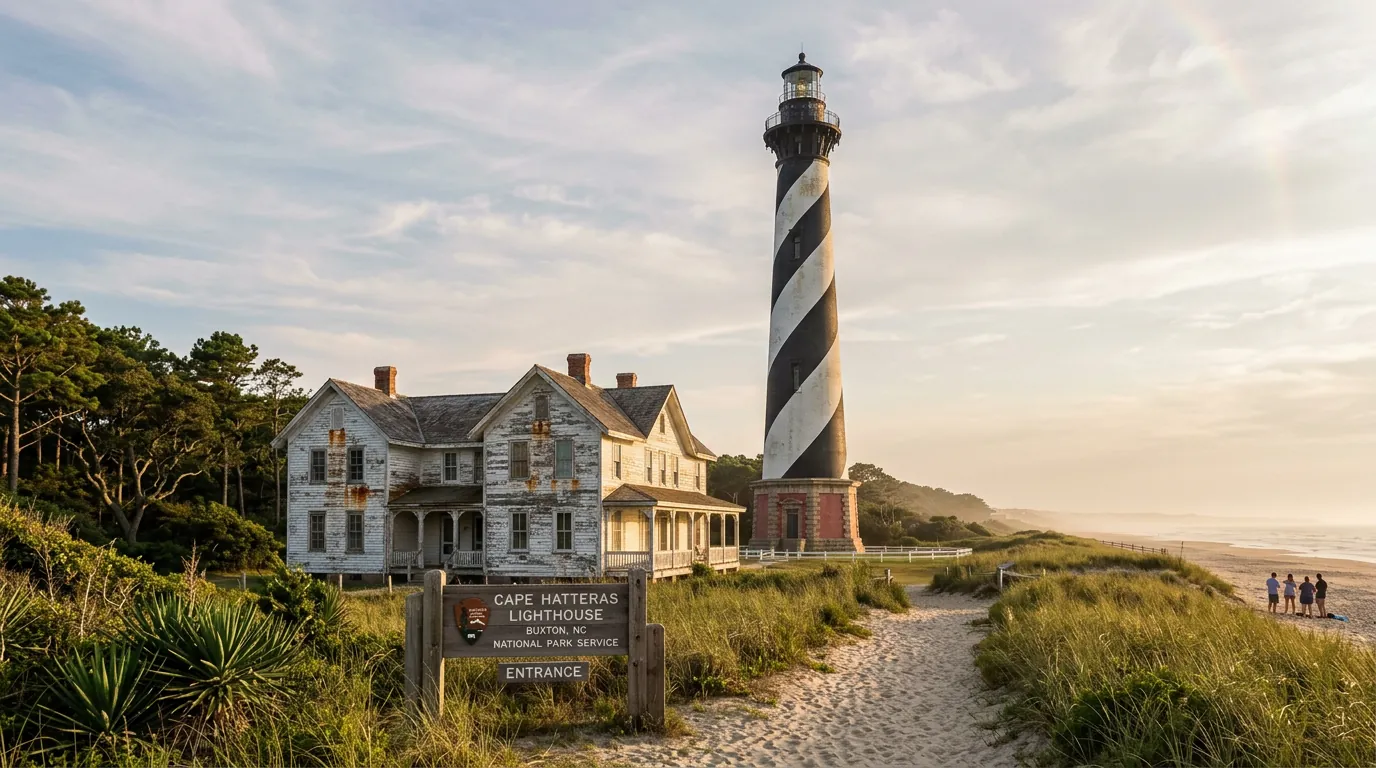
- Ramp 43 — Near the Cape Hatteras Lighthouse in Buxton. One of the most popular ramps on the island. Wide beach, great fishing, and close to the lighthouse if you want to combine activities.
- Ramp 44 — Just south of the lighthouse. Another solid Buxton option with good beach width and consistent sand quality.
- Ramp 45 — South of Buxton toward Frisco. Less crowded and a favorite among locals who want solitude.
- Ramp 48 & Ramp 49 — The famous Cape Point access. Where the Gulf Stream and Labrador Current converge, creating some of the best surf fishing on the East Coast. Also the most closure-prone during nesting season. Check status before you go.
- Ramp 55 — Near Hatteras Village at the southern end of the island. Good for accessing the southern beaches and less trafficked than Cape Point.
Each ramp has a self-service air station nearby, so you can deflate before entering and re-inflate on your way out. Arrive early on summer weekends — popular ramps like 43 and 48 can form a line by mid-morning.
Tire pressure for beach driving
Airing down is the single most important thing you can do to avoid getting stuck. Most experienced Hatteras beach drivers drop their tires to 15–20 PSI for soft sand. The lower pressure dramatically increases your tire's footprint, letting it float over the sand instead of digging in.
Never drive on pavement with deflated tires — the sidewall can overheat and the tire can separate from the rim. Use the self-service air stations at the ramps to re-inflate before hitting NC-12. A portable 12V compressor kept in your vehicle is a smart backup.
Seasonal closures and nesting restrictions
Cape Hatteras National Seashore is a critical nesting habitat for shorebirds and sea turtles. From roughly March through November, portions of the beach close to vehicles when nesting activity is detected.
Here is what to expect:
- Pre-nesting closures — Small buffer zones go up around active nests, typically marked with temporary fencing and signage.
- Peak nesting season — May through August sees the most closures, especially at high-traffic areas like Cape Point (Ramp 48/49). The NPS posts daily ORV route status maps online.
- Post-nesting — Most closures lift by late summer or early fall, but turtle nests may remain protected until hatchlings emerge.
- Temporary closures — Even outside nesting season, sections may close for resource protection, debris cleanup, or overwash events after storms.
Always check the official NPS ORV route status map before heading out. The map is updated daily and shows exactly which ramps and beach segments are open.
Rules and etiquette for beach driving
Beach driving is a privilege, not a right. Follow these rules to keep access open for everyone:
- Speed limit is 15 MPH — Slower near pedestrians, fishermen, and wildlife. The beach is a shared space.
- Stay in the designated corridor — Do not drive above the high-tide line into the dunes or through nesting areas.
- No driving through closed areas — Closure signs and symbolic fencing are legally enforceable. Fines are steep.
- Yield to pedestrians and wildlife — People walking, dogs on leashes, and shorebirds all have the right of way.
- Pack out everything you pack in — Leave no trash, fishing line, or debris. The beach is a protected national park.
- No glass containers — Glass is prohibited on all NPS beaches.
- Alcohol laws apply — Open container and public intoxication laws are enforced on the beach.
- Camping is not allowed — You cannot sleep in your vehicle or camp overnight on ORV routes.
Surf fishing from your vehicle
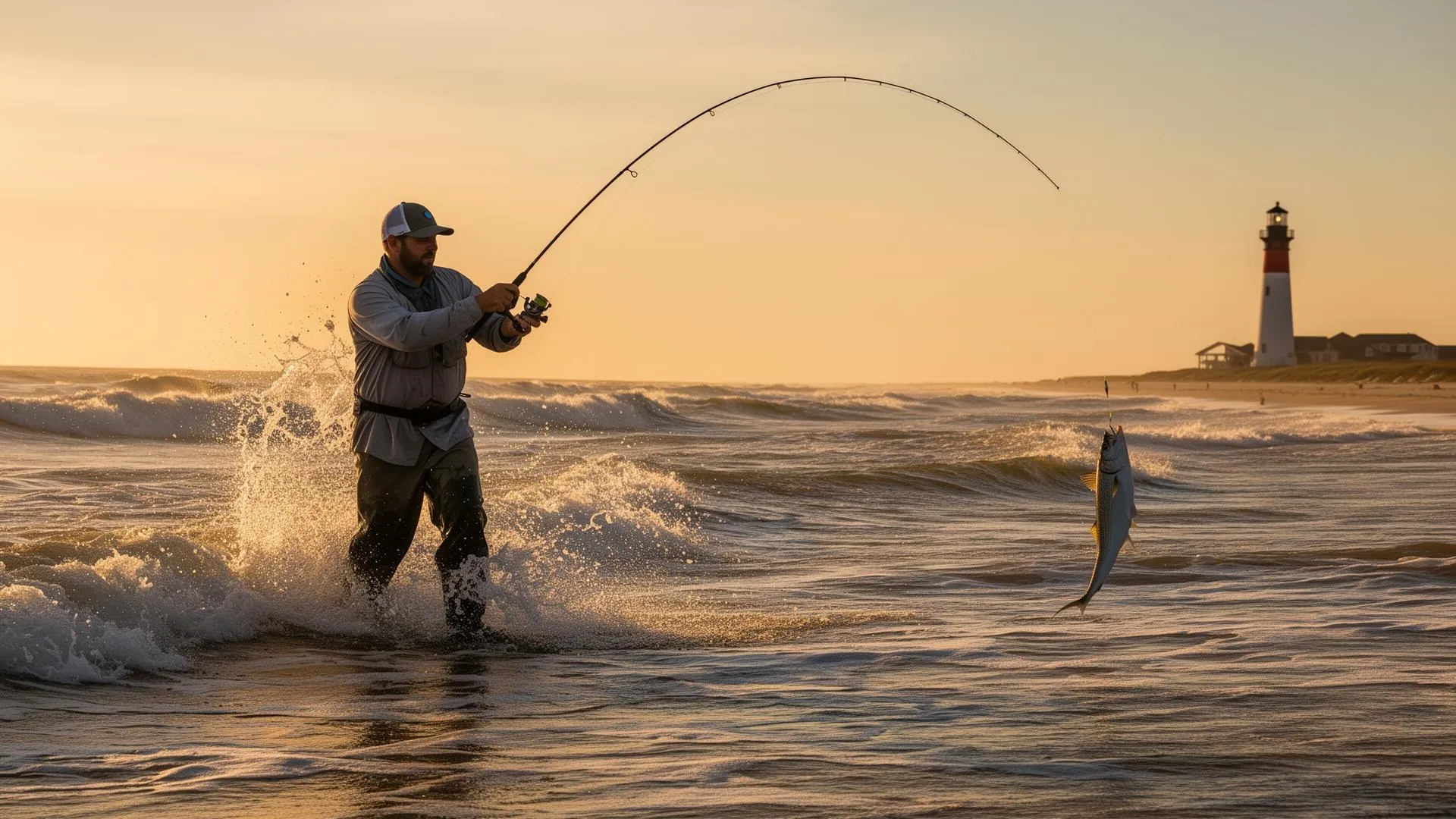
One of the biggest draws of beach driving on Hatteras Island is surf fishing. Cape Point, Ramp 43, and the beaches around Ramp 38 are legendary among East Coast anglers. With your 4WD parked right at the waterline, you can cast for red drum, bluefish, speckled trout, Spanish mackerel, pompano, and striped bass depending on the season.
A North Carolina Coastal Recreational Fishing License is required for anyone 16 and older. You can buy one online through the NC Wildlife Resources Commission or at local bait shops in Avon and Buxton. For a deeper dive into species, seasons, and gear, see our Cape Hatteras Fishing Guide.
What to do if you get stuck
Even experienced drivers get stuck occasionally. If you start to sink, stop immediately — spinning your wheels only digs you in deeper. Here is the recovery sequence that works:
- Stop and assess. Do not keep spinning. Get out and look at all four tires.
- Air down more. If you are at 18 PSI, try 12–15 PSI to increase floatation.
- Dig out. Use your shovel to clear sand from in front of and behind the tires.
- Lay traction boards. Position them under the tires that are slipping.
- Engage 4-Lo. Use your lowest gear and ease onto the throttle gently — no sudden acceleration.
- Ask for help. The ORV community on Hatteras is tight-knit. Most drivers will stop to help. A proper tow strap recovery from another 4WD is often the fastest solution.
If none of that works, call a local towing service. Tow fees from the beach start around $200 and go up fast depending on how far you are from the ramp. Prevention is always cheaper than recovery.
Best time of year for beach driving
Fall and early spring are the sweet spots for ORV driving on Hatteras Island. September through November offers cool weather, fewer crowds, minimal nesting closures, and some of the best surf fishing of the year. March and April can also be excellent, though pre-nesting closures may limit access at Cape Point.
Summer (June–August) is fully open in many areas, but nesting closures can shrink the available beach corridors — especially at Ramp 48/49. If you are visiting in peak summer, Ramp 34 and Ramp 38 near Avon tend to stay open more consistently than Cape Point. Always verify the daily status map before loading up the truck.
Make Avon your beach driving base camp
Avon sits in the middle of Hatteras Island, giving you easy access to ramps both north and south. After a long day on the sand — surf fishing, shell collecting, or simply watching the waves from your tailgate — you will appreciate coming back to a real house with a hot shower, a full kitchen, and room to spread out gear. If you are still planning your stay, King Tide Rising is a walkable four-bedroom home in the heart of Avon with a private hot tub — ideal for rinsing off after a day on the beach.
For more ways to fill your trip, explore our guides to Cape Hatteras fishing, the best beaches in Avon, things to do in Avon, and the Cape Hatteras Lighthouse.